TripCraft
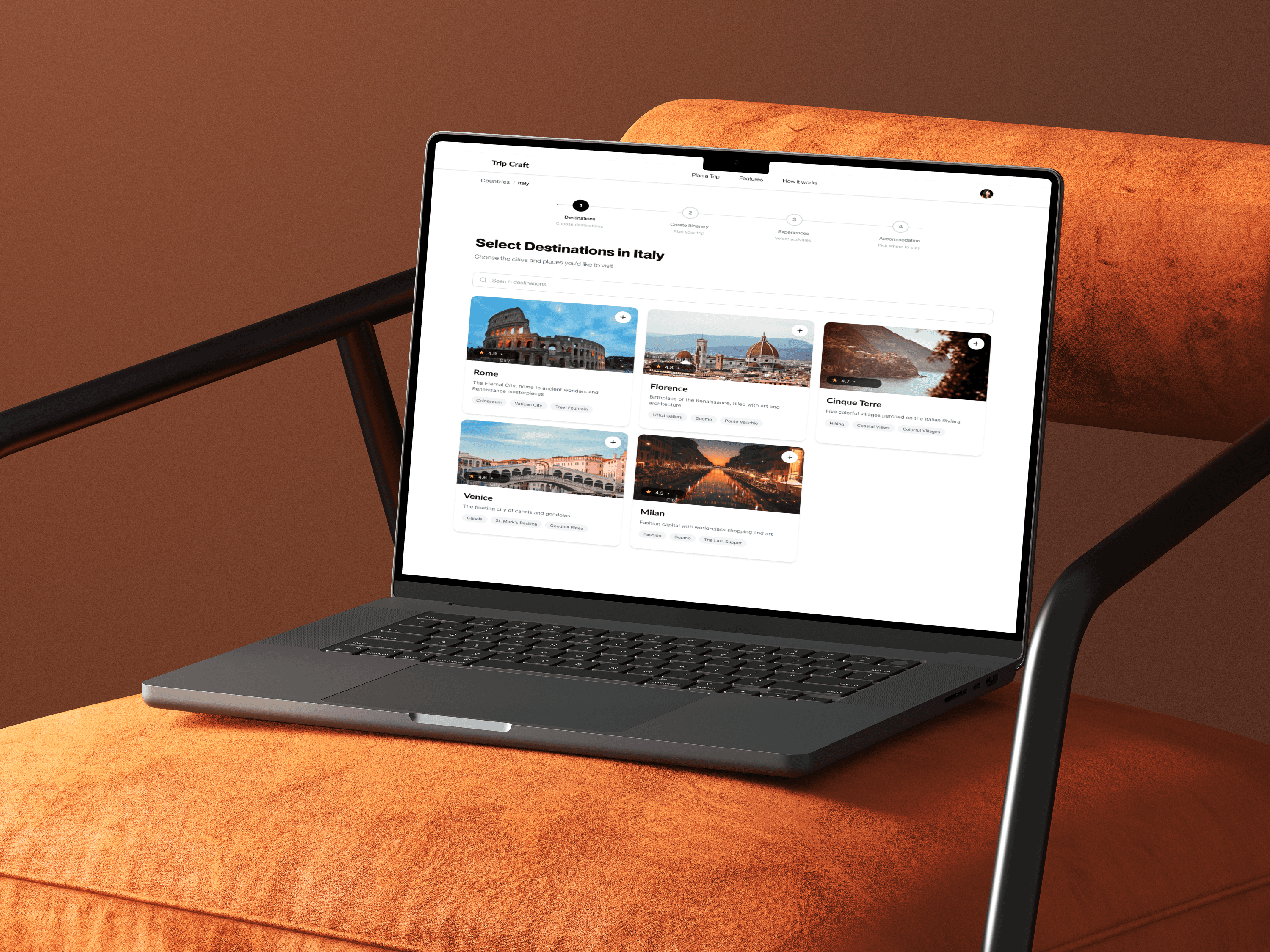
Helping Busy Professionals Plan Confident, Flexible Trips
From scattered inspiration to confident travel decisions in four simple steps
MY ROLE
UX Research, Product Design
TEAM
Personal Project
TIMELINE
4 weeks (2025)
We've all experienced it: endless tabs, bookmarks, screenshots, and half-remembered blogs littering your browser. All in the name of planning a trip, But planning a journey shouldn't feel like a second job. And for busy professionals, it rarely does.
People don't struggle with wanting to travel, they struggle with turning scattered inspiration into a confident, realistic plan they can commit to without stress. What if planning felt less like a checklist and more like forward momentum?
"How might we empower busy travelers to feel confident, without overwhelm, while planning their trips?"
The Problem
Today's travel platforms are excellent at booking specific components, flights, stays, activities, but none focus on planning as a unified experience.
1
2
3
4
My Process
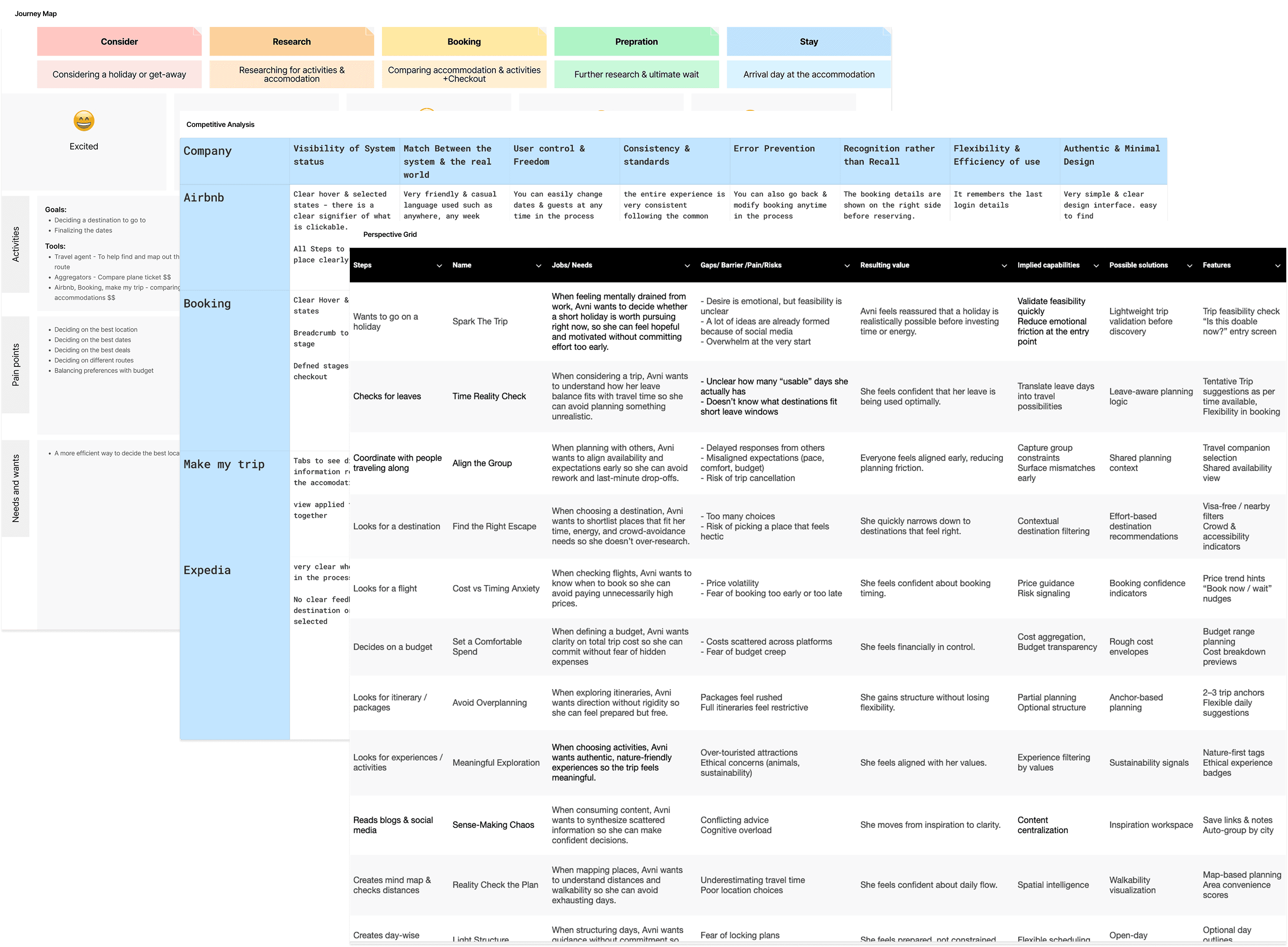
User Research - Understanding Real Behaviors
To ground the design in reality, I conducted qualitative research with 5 users who Travels at least 2-3 times in a year.
Research Goals
What triggers travel decisions?
Where do users get stuck during planning?
How do travel companions influence needs?
What factors truly influence booking decisions?
Methods
1:1 Interviews
Competitive Analysis
Journey Mapping
Jobs-to-Be-Done
Key Insights
01
Travel decisions are opportunity-led
Users ask "Is this trip doable now?" before anything else.
02
Planning breaks under information overload
Inspiration is scattered; clarity is absent.
03
Context changes everything
Needs vary dramatically depending on who you're traveling with.
04
Users plan with multiple tools
social media, blogs, maps, note apps, stitching decisions together manually.
The Hero
The Time-Crushed Traveler
Avni
A 31 year old busy professional who travels 2–4 times a year with her husband, family, or friends.
"I like knowing what's possible, but I don't want my trip to feel over-planned."
What She Wants
Relaxation, connection, and cultural discovery
Pain Points
Information overload
Late flight searches with high prices
Unclear walkability
Fear of making the 'wrong' choice
Avni doesn't lack desire, she lacks confidence in her travel plans.

Design Strategy
Where TripCraft Makes the Difference
Progressive Disclosure
Show just enough information at each step, no feature overwhelm.
Visual Spatialization
Users think spatially, show trip flow, not just lists.
Constraint-Led Design
Limit comparisons to reduce decision fatigue (compare up to 3 destinations).
The Solution
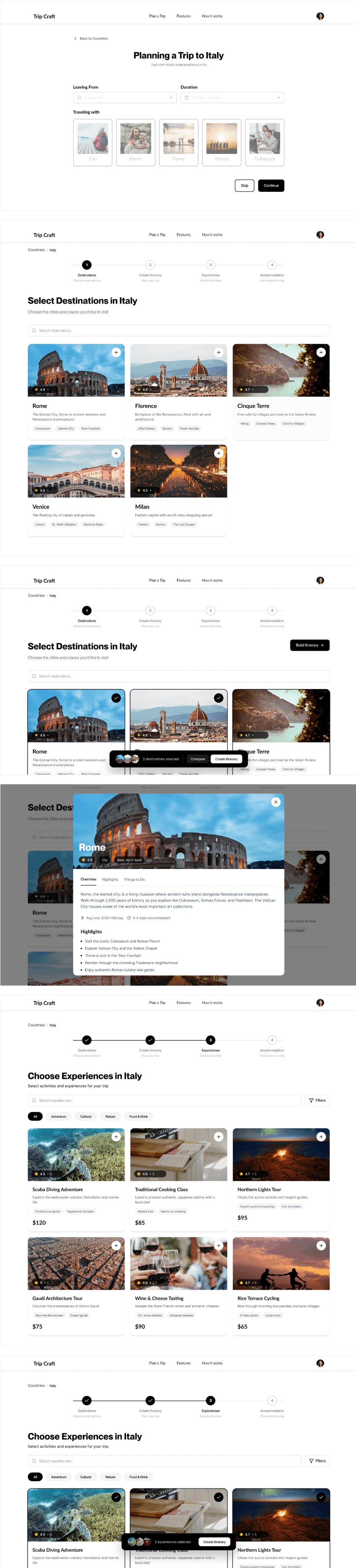
Wireframes
I iterated on some ideas to create Hi-fidelity wireframes to conduct further usability testing with 3 users to gain early validation on the ideas.
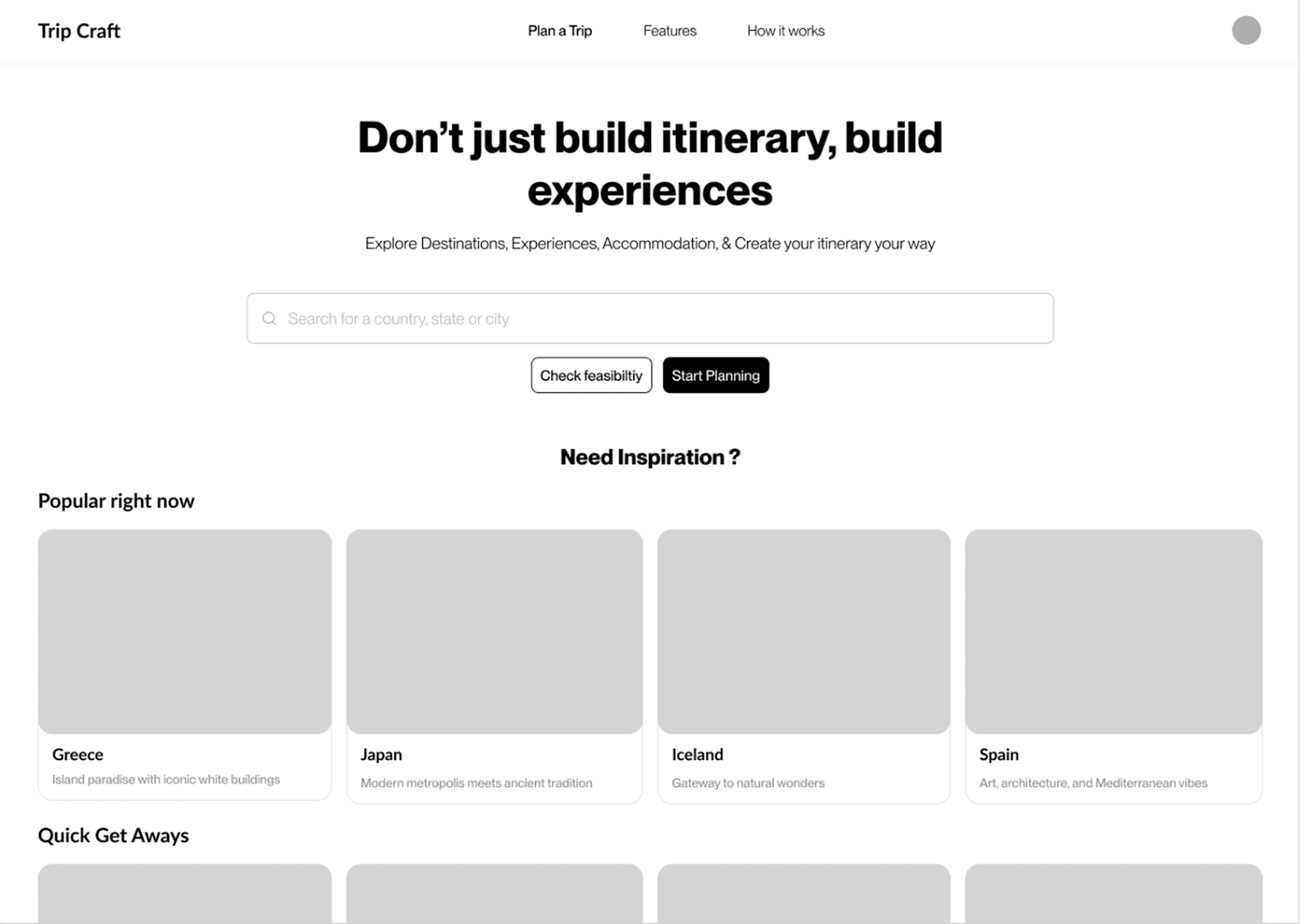
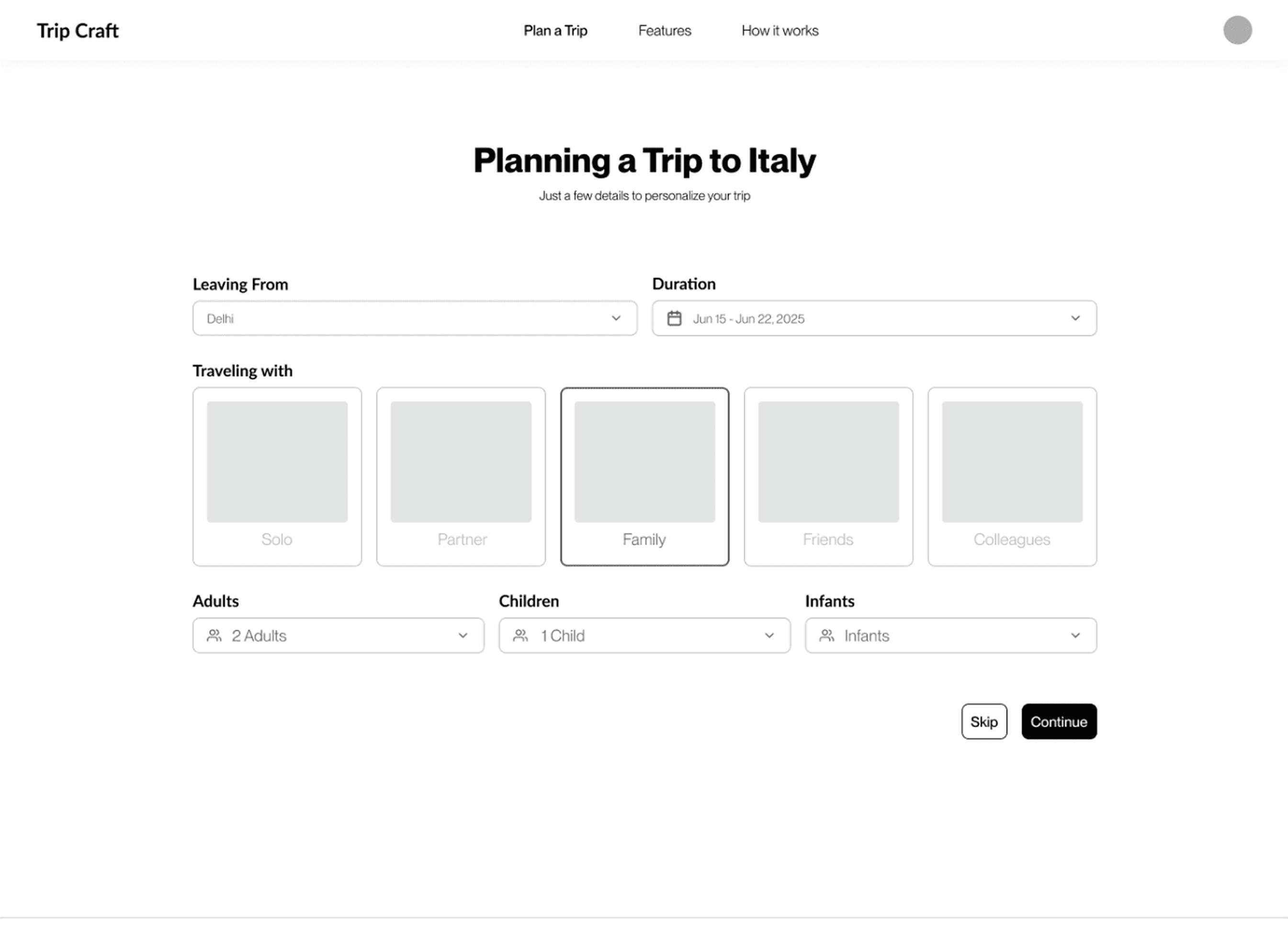
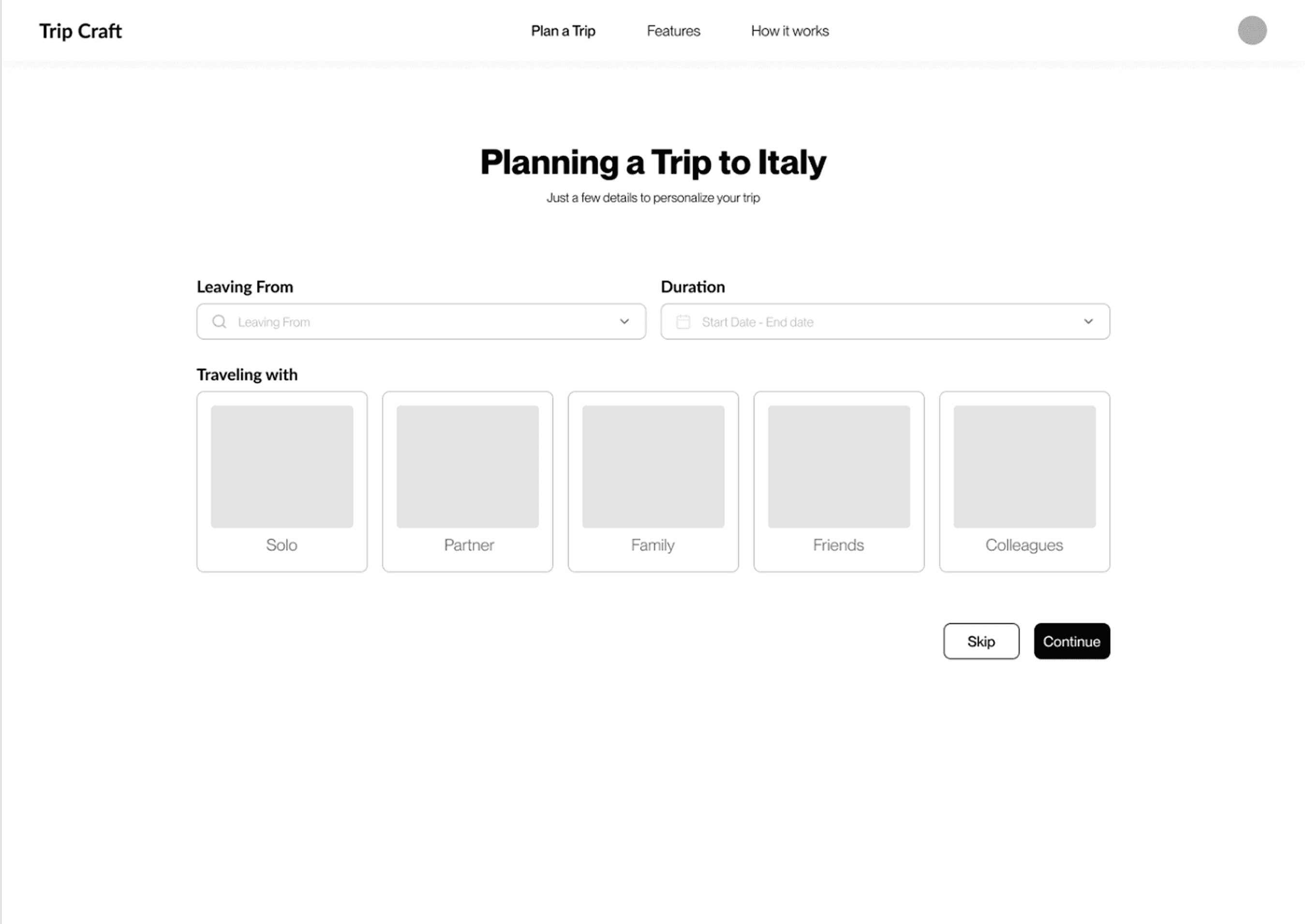
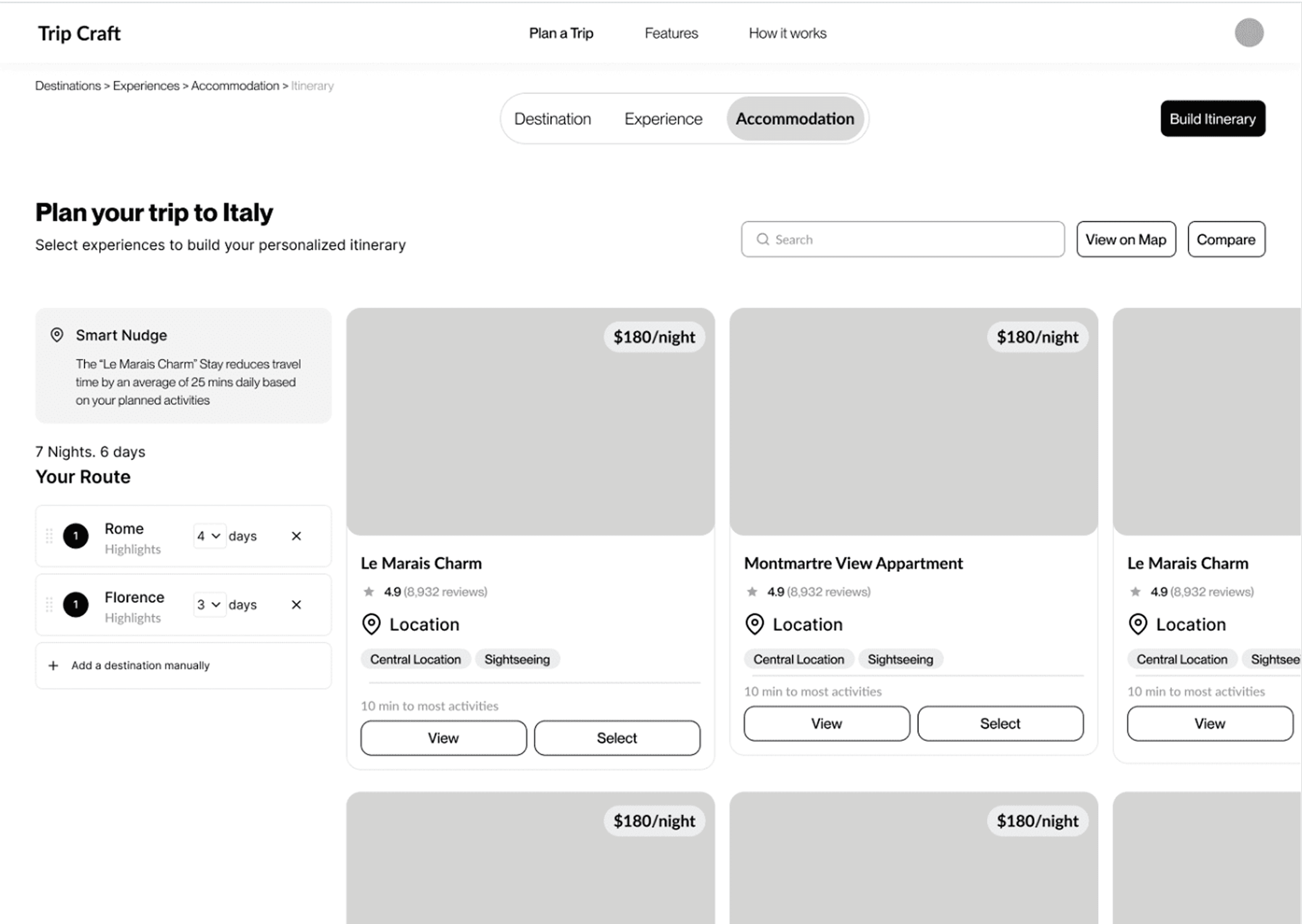
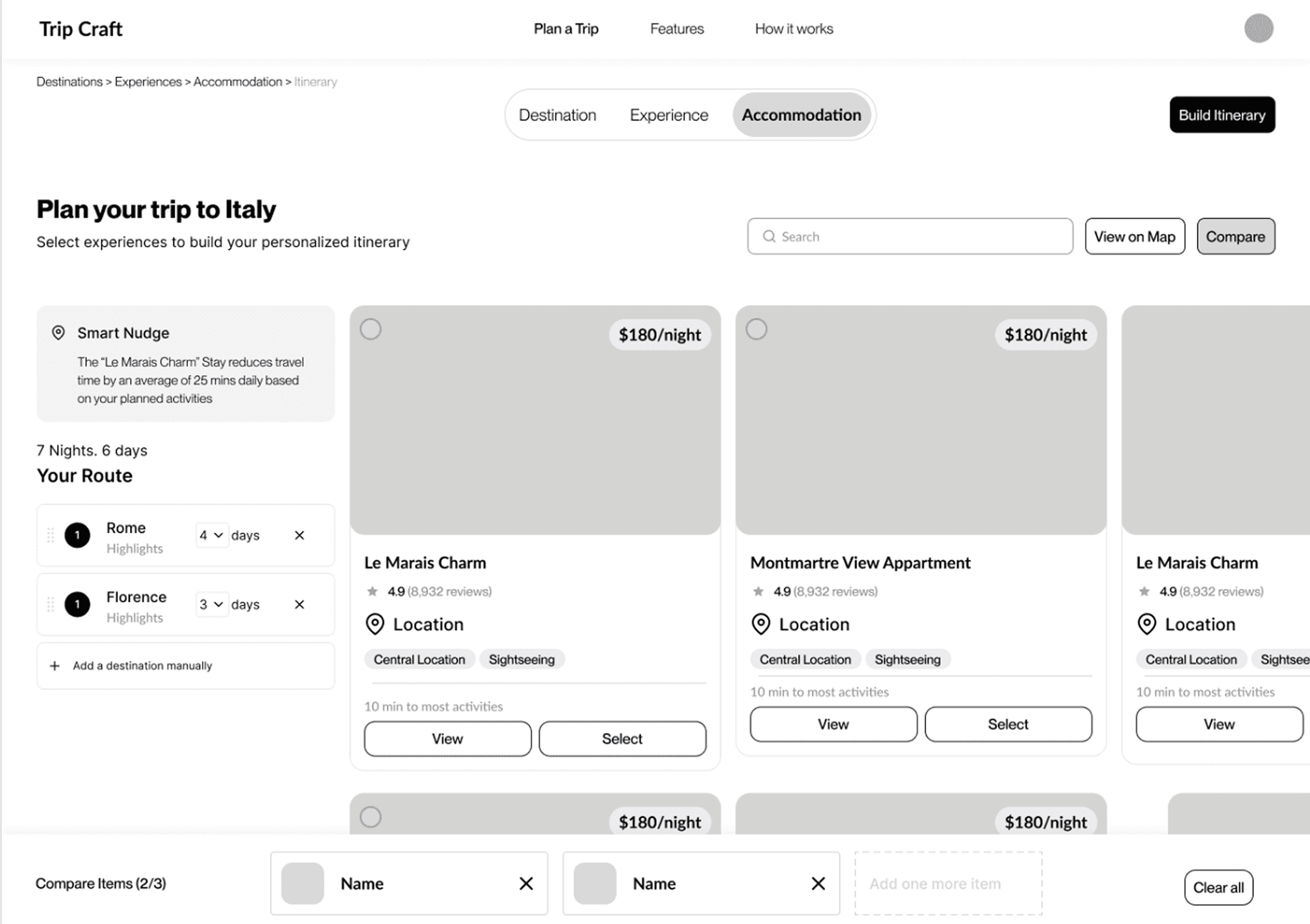
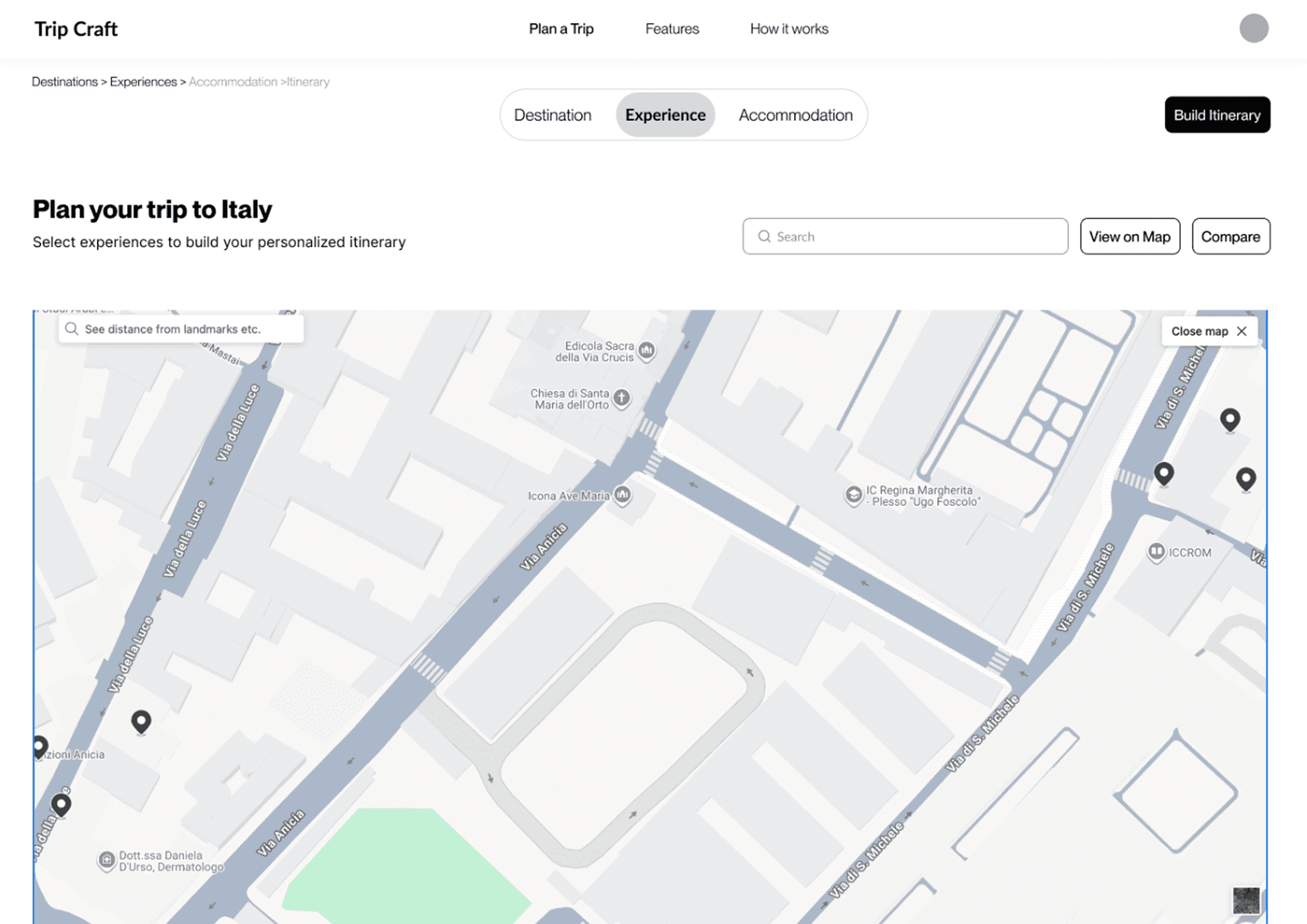
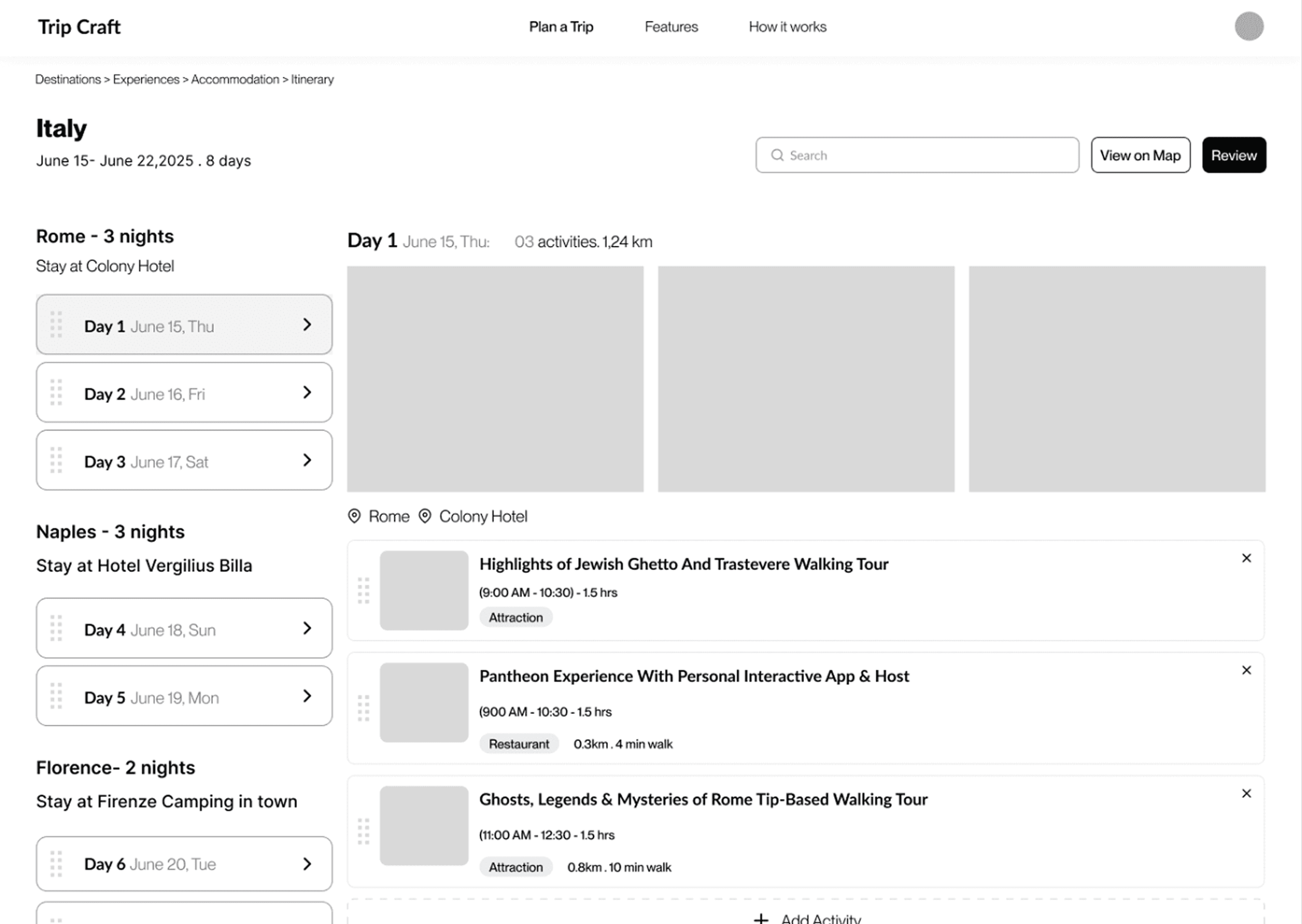
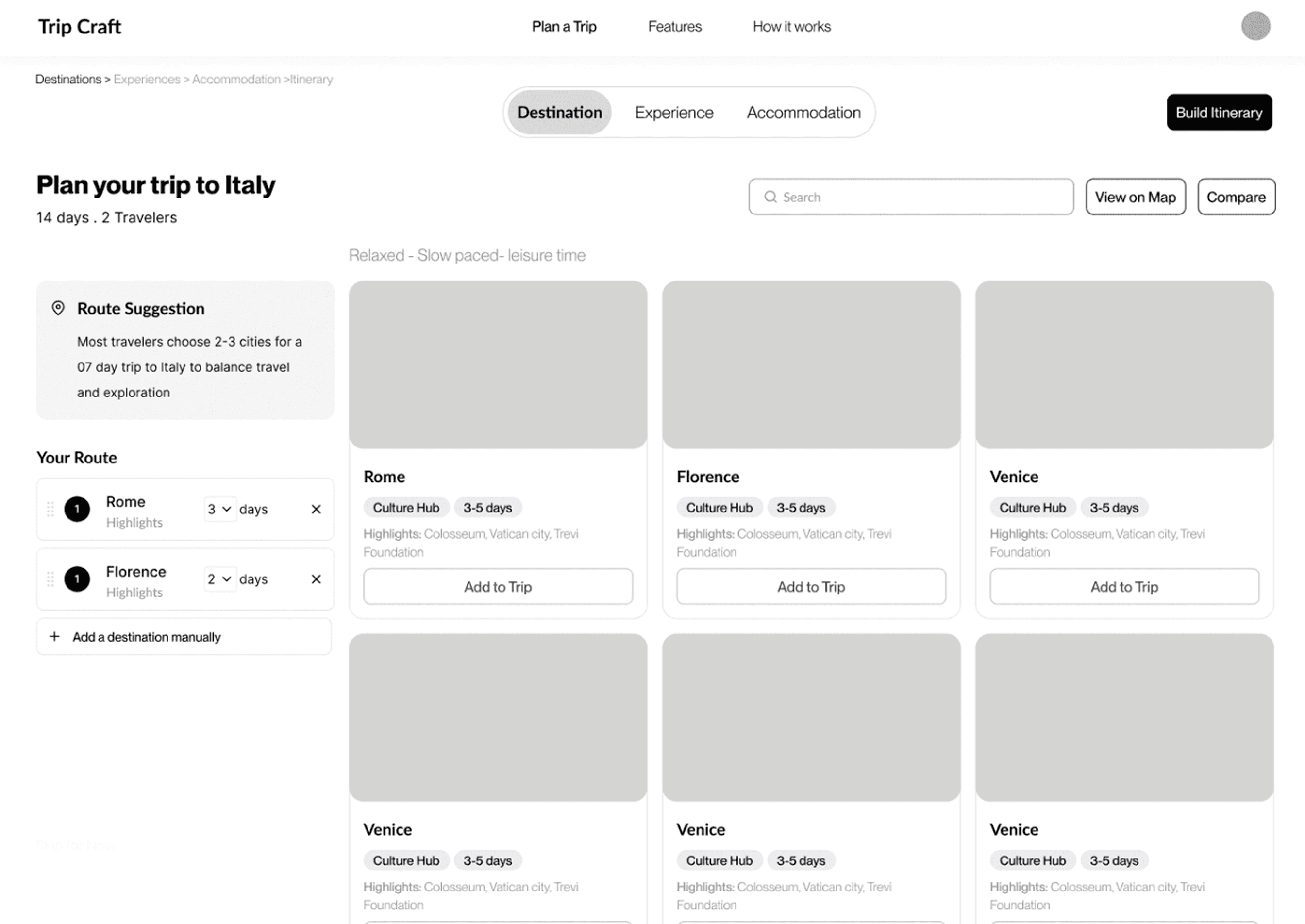
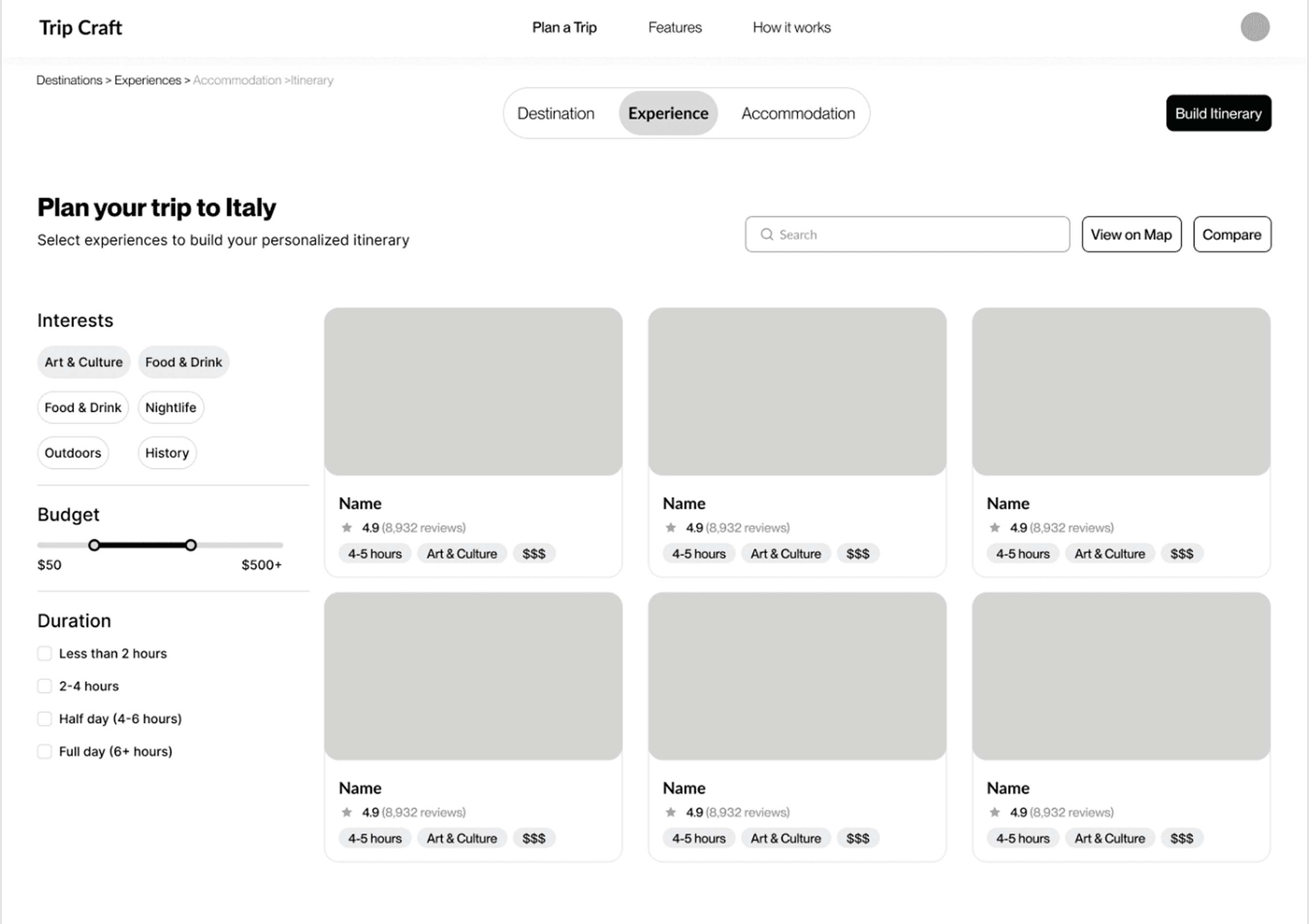
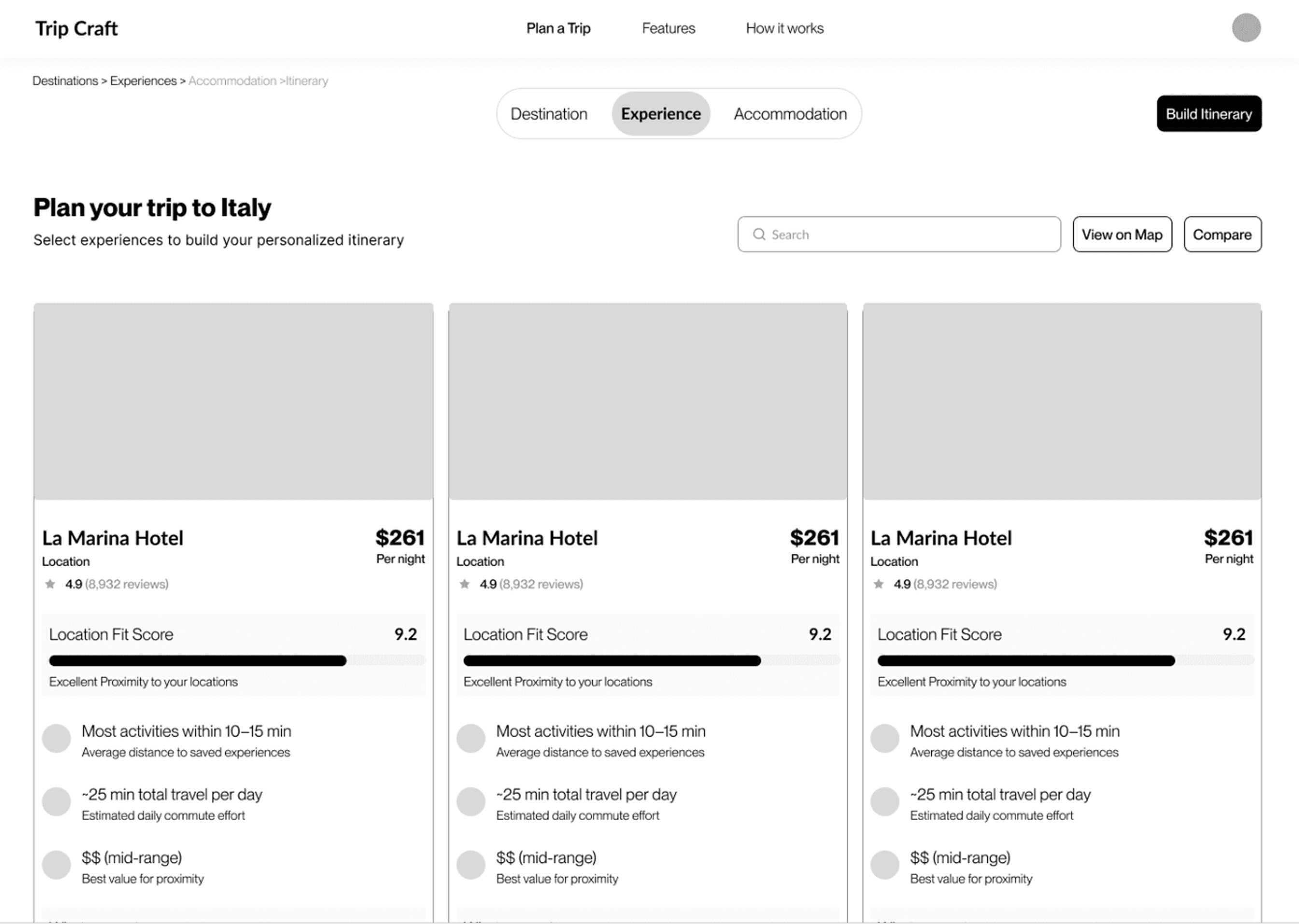
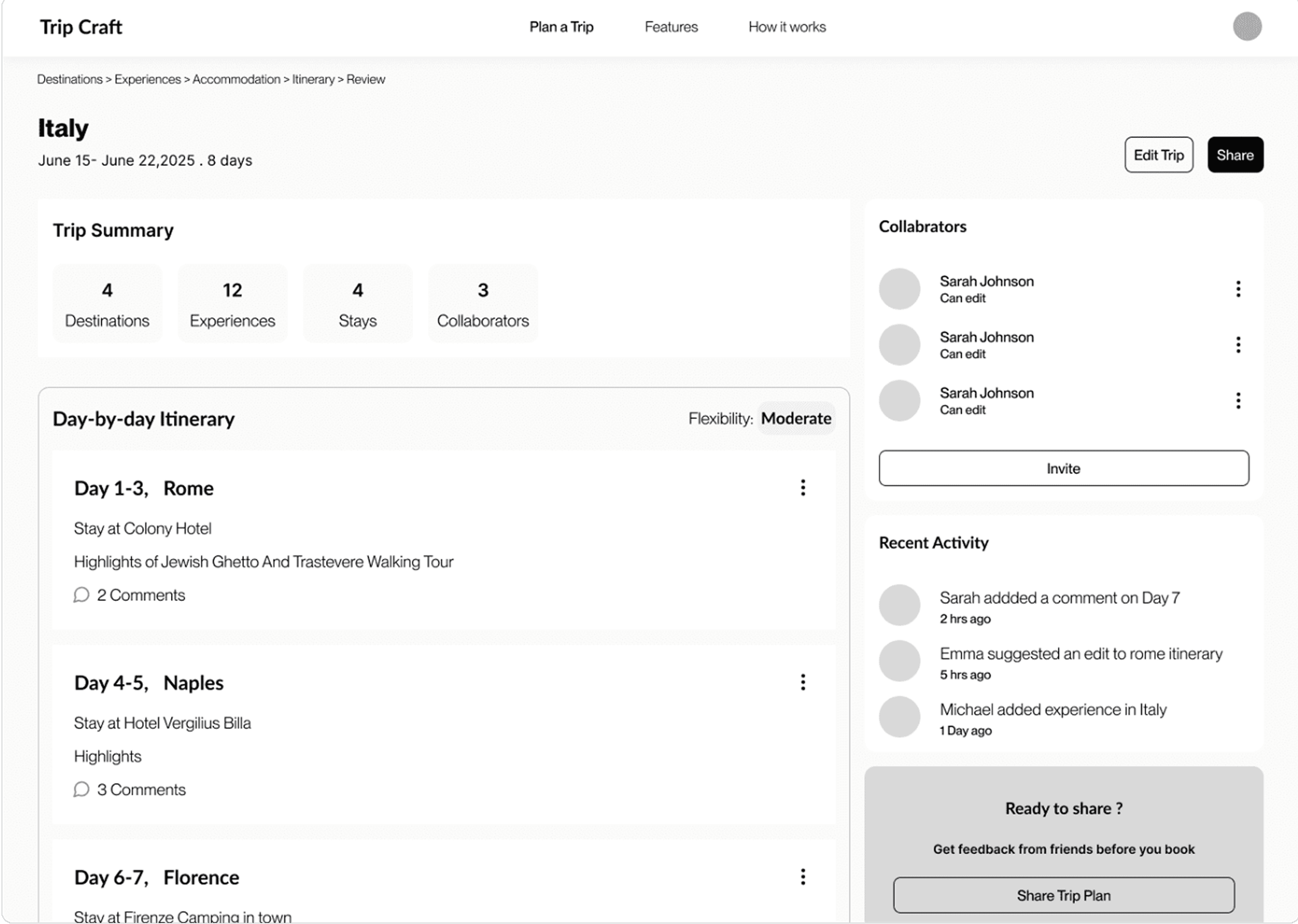
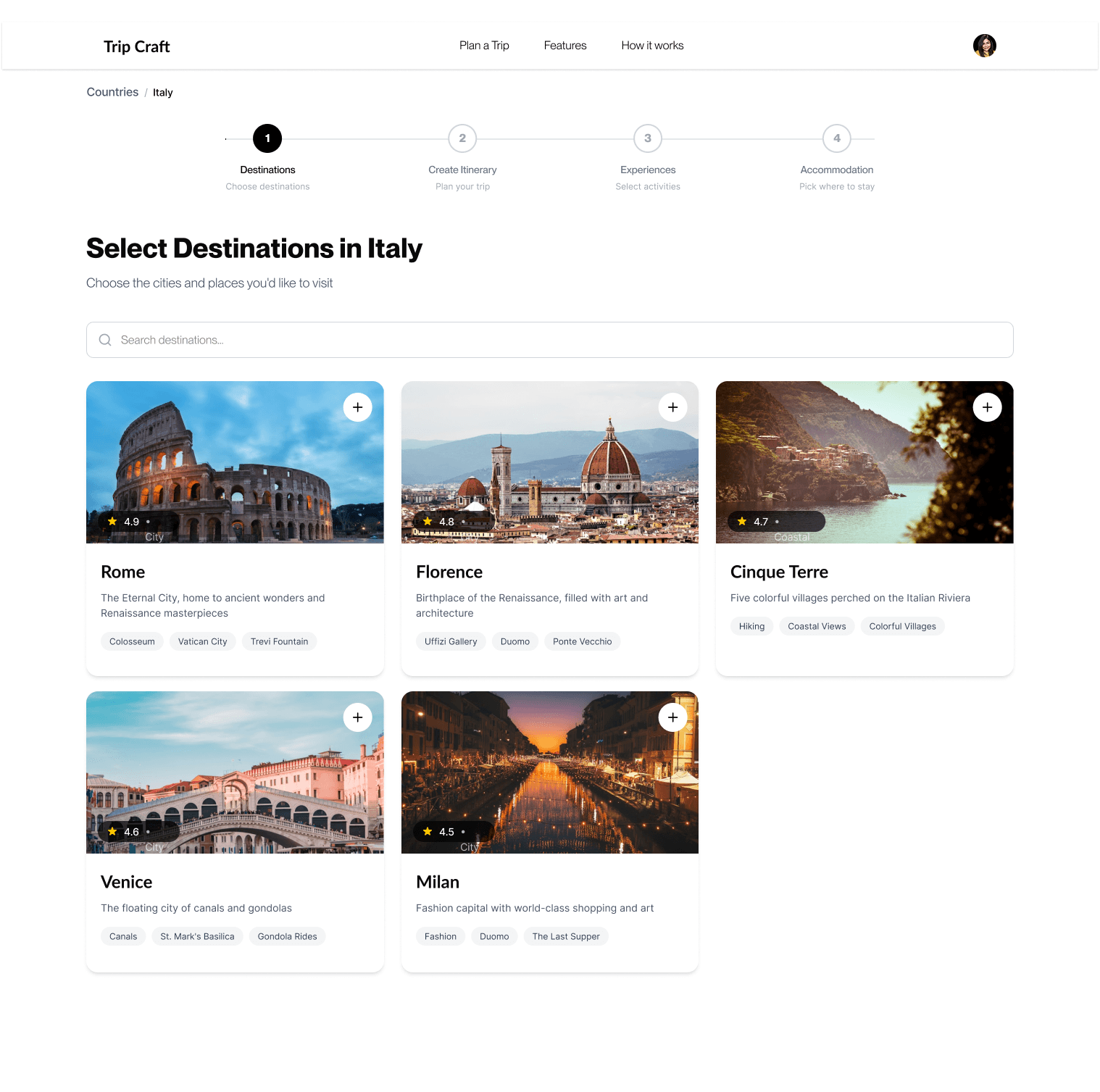
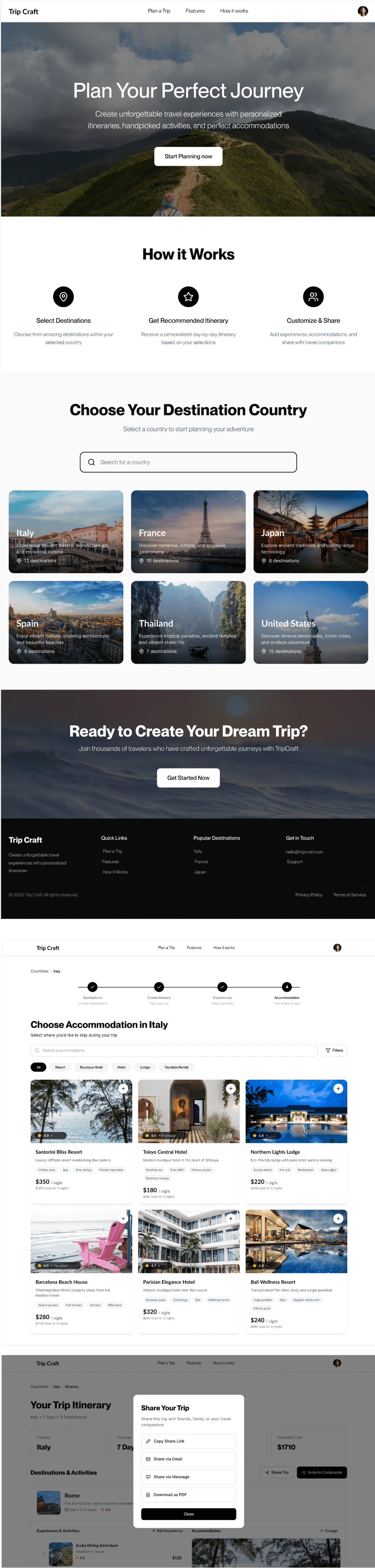
TripCraft's experience intentionally mimics how people naturally think about planning, moving from big picture to specific decisions.
Start With Intent, Not Commitment
The user begins with just the essentials:
• Select Country
• Dates (flexible if needed)
• Travel companions
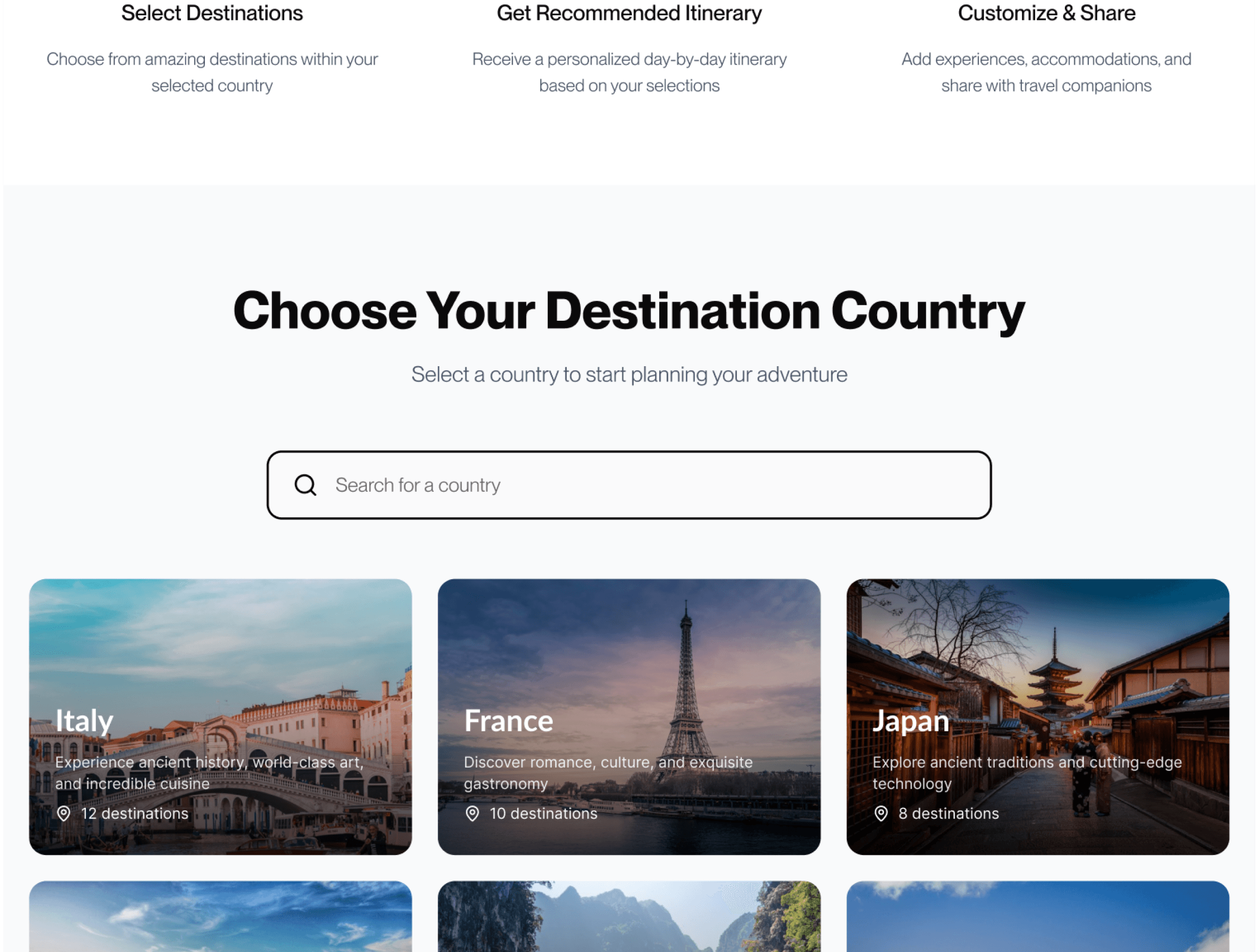
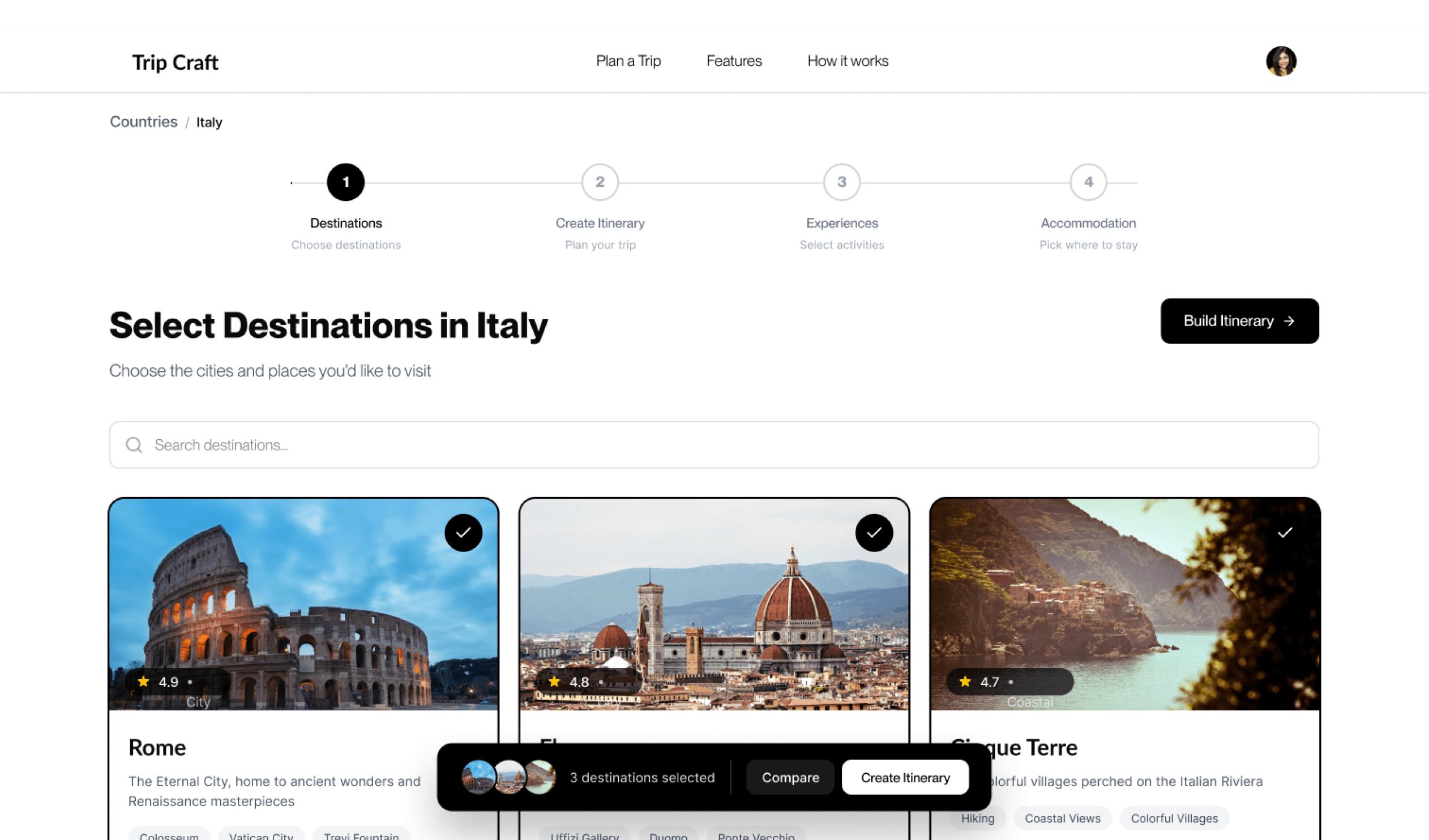
Choose
Users can:
• Dates (flexible if needed)
• Travel companions
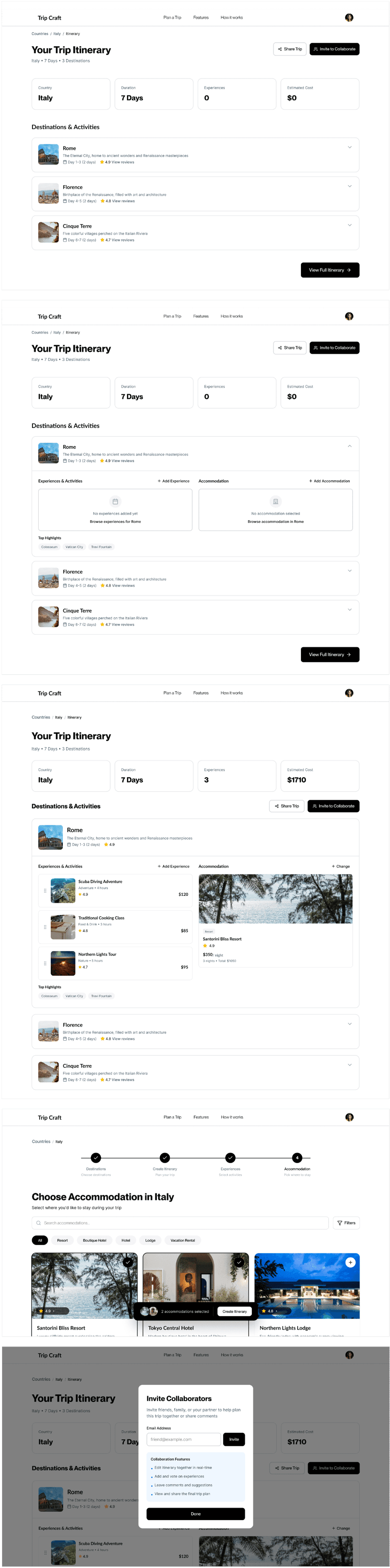
Build a Flexible Itinerary
Once destinations are chosen, TripCraft structures planning around them:
• Organize by destinations & not strict days
• Add experiences and accommodations contextually
• Validate through natural groupings
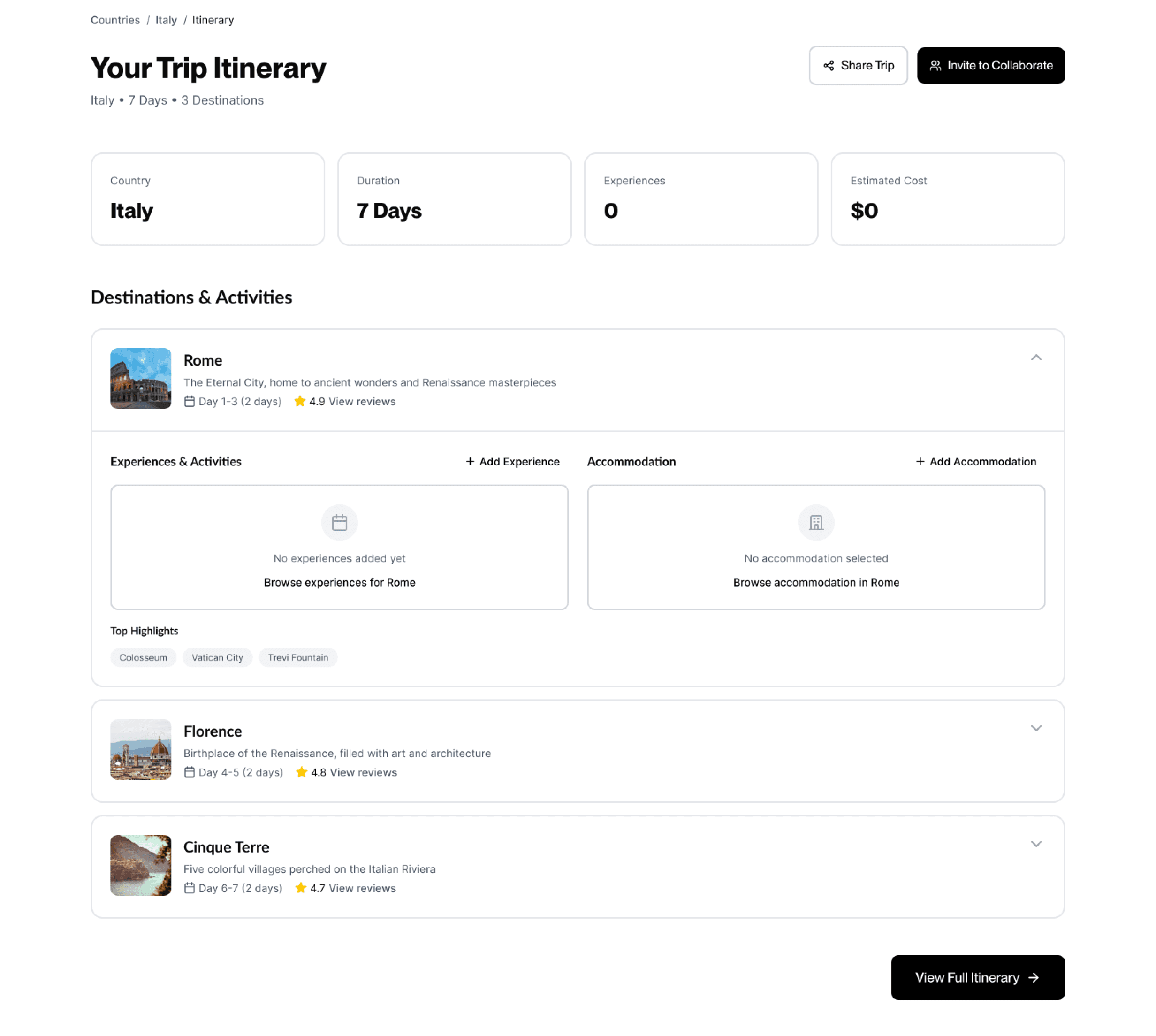
Review, Refine, & Invite Collaboration
At this stage, Travellers:
• See a trip overview (duration, activities, cost)
• Share or invite collaborators to review or edit
Final Screens
The Complete Experience
Iteration
I conducted iterative usability testing with 3 participants through different fidelity levels:
1
Low-Fidelity Wireframes
2
High-Fidelity Mockups
3
Interactive Prototypes
Key Design Shifts
Reduced upfront form friction
Increased map visibility
Prioritized better navigation through phases
Added contextual experience filters
Outcomes
Key Learnings
Clarity Over Choice
People don't need more choices, they need clarity
Flow Over Details
Confidence comes from understanding flow, not memorizing details
Scaffold Decisions
Travel planning tools should scaffold decisions, not overwhelm them
TripCraft reframes travel planning as a Confidence building journey, not a task list.
What's Next
While the MVP focuses on core planning flow, further enhancements may include:
Automated feasibility signals (effort, travel fatigue)
Companion-specific planning variants
Smart suggestions based on past trips
By focusing on user confidence rather than feature lists, We unlock better decisions, happier travelers, and a planning process that feels intuitive from start to finish.
Explore other case studies
More work from the portfolio

Let's Work Together
Have a project in mind?
I'm always open to discussing new projects, creative ideas, or opportunities to be part of your vision.
Get in Touch